Intersections of Transness, Anti-Blackness, White Supremacy, and Barriers to Entry in Recreational Sport
Or, alternatively titled Why I No Longer Play in the Trans Liberation Basketball League of Atlanta
by cee will
about a 10 minute read
There is a lot to say about transness, basketball, and the persistent boogeyman of white supremacy. As a degree-carrying BSM (Bachelor’s in Sport Management) and prominent non-binary icon, I feel especially qualified to speak on them.
If sports are a microcosm of society, anti-Blackness is global, and white supremacy is pervasive, then naturally, a gathering of white trans people playing a sport is sure to be a site of violence. As Dr. Ketra Armstrong, University of Michigan professor of Sport Management, states in her 2023 lecture, “Inside (the) Game: Race, Gender, and the Sociocultural Business of Sport”, “Sport is not exempt from a society in which it is embedded.”
Atlanta’s Trans Liberation Basketball League (TLBL) was created out of necessity. As we get older, fewer opportunities exist for adults to play organized ball with peers. There are even fewer opportunities for first-timers or newcomers to the sport. The added layer of genderqueerness and nonbinaryism present even fewer options. That’s where TLBL comes in.
TLBL, a collectively run, DIY player-lead project established in the summer of 2023, values self-determination, decentralized decision-making, and community organizing. I have personally seen several league members make new pals, recover from a tough financial situation through group economics, and develop a sick fade-away over the course of a single season. The only issue is that without an intentional focus on committing to anti-racism, shit gets real racist, real fast.
Similar to the trans community struggling to find safe spaces to access sports, Black folks also experience significant barriers to entry. Barriers to entry, inclusive of all genders, include time poverty, high participation costs, and lack of facilities.
According to a report from the UK-based Race Equality Foundation, race and ethnicity are two of the strongest underlying factors when predicting an individual’s access to and experience with sport and sport participation. The studies mentioned in this report, highlight that one-off or repeat incidents “limit or arrest” one’s attempts to participate in sport.
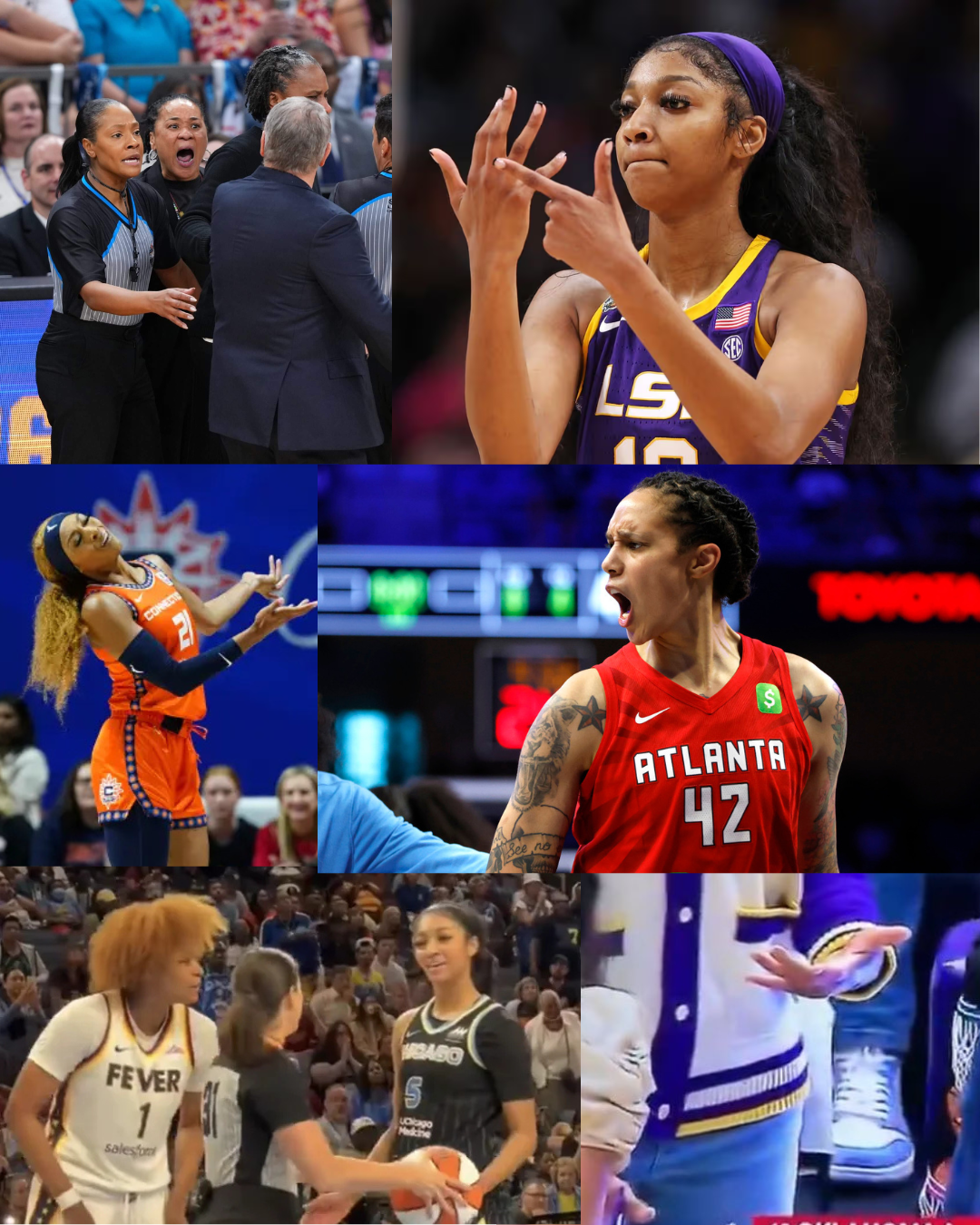
For Black trans athletes, especially those raised as “female”, incidents such as clearly biased referees, backhanded descriptors from opponents such as “classless” and “physical”, and overzealous parents transvestigating from the stands have been commonplace since we were young. Other incidents experienced in girlhood, including repeated instances of stifled self-expression (confidence read as “attitude”) and lack of racial diversity, illuminate why Black girls reportedly have higher rates of dropping out of youth sports.
In recent years, real-world examples of bias against Black women and non-gender-conforming people in sport have reared its head several times, almost perennially. Unbalanced foul calls for HBCU basketball players, calls for invasive “gender” tests, and mandated hormone “therapy” further illustrate why some Black women turn away from sports, voluntarily or involuntarily.

Black women, across the sector, face extreme levels of scrutiny due to publicly-catastrophized reactions, perceived gender and natural skill level, and their sheer will to exist as a Black person in an anti-Black world. Pictured (Left to right): Brittney Griner (WNBA), Caster Semenya (South African Olympic Runner), and Jess Carter (NWSL/Team England)
If you combine the barriers to entry for trans athletes with the barriers to entry for Black women athletes, you, my friend, are in possession of a recipe for disaster. Although I no longer identify as a Black woman, I spent the majority of my girlhood in a gym. As a Black non-binary person playing in the TLBL, I can attest that several of the aforementioned experiences mirror my experience in the league.
I first joined TLBL during the inaugural season in June 2023. Imagine a park full of queers of all shapes, sizes, and cliques gathering for one united purpose — liberatory basketball. Folks who have never played a sport in their life playing with and against seasoned, self-proclaimed sporty queers. Organizers tabling for their respective causes: Free Palestine, safe abortion access, and STI testing, to name a few. Recreation and camaraderie at the forefront each and every Saturday for 2 months straight. In a country that grows increasingly more transantagonistic by the day, this sounds like a dreamscape. And it was. Keyword: was.
While I enjoyed my overall time in the league, I can recall a few snide comments directed towards me. My commitment was questioned because I couldn’t attend weekday practices on the other side of town. My transness was called into question because I opted to play in an additional league (mostly cis Black women) outside of a trans-centered league. In the inaugural season, attendance and attrition plagued several teams, so I volunteered to fill in where needed. In a subsequent season, I was told that me playing on multiple teams would be unfair, even though the attrition issue remained. The imagery and faces of the league varied based on who the photographer was. In the inaugural season, I can recall seeing my face in several photos. Towards the end of my tenure, the photographer actively avoided capturing my team and I’s likeness.
Perhaps the most damning event occurred in the Summer of 2024. It was a scorching June morning in the West End of Atlanta. Hot dogs for sale on the sideline, cutie QTs laid out on blankets around the court, upbeat music of all genres blaring at a tasteful, yet resonant volume. My team, They Slash Them (ha!) was playing for a playoff spot against Blue Dream. We had played this team several times before in the season and were excited to play for keeps.
Throughout the game, several of my teammates and I traded sportsmanlike banter with players from the opposite team.
“That ain’t going in!”
“Hell nah!”
“Too small!”
Nothing mean-spirited or harsh in nature, in my opinion. Plus, we were amongst friends. TLBL players routinely play together and party with each other, so many of us know each other quite intimately. My team felt safe enough to have a little fun with what might have been our last game for a while. The gameplay was exhilarating with multiple lead changes and speedy two-way transition offenses. For most of the game, the W could have gone either way.
Towards the end of the game, things took a turn. An unqualified referee, who took the court sporting a half-smoked cigarette in one hand and full can of beer in the other, blew the whistle on several questionable fouls. That was mostly okay because TLBL advocates for safety above all. They would rather over-call than under in order to prevent injuries. This same referee, later in the game, called an “emergency meeting” at half court to address the “tension” between the teams. Players from both teams expressed confusion. We were all having fun, so what gives? The faux-ref said we (majority Black and dark skinned people) were being aggressive, while league organizers (white and/or light skinned) stood around and silently agreed. That part was largely not okay and majorly distasteful. From my recollection, this kind of thing only happened to my team.
They Slash Them ultimately lost the game, with this incident staining an otherwise normal exhibition of talent. I wish I could remember the final foul count for each team because now I am only left with speculation.
How do societal ills find themselves in a quaint safe space like TLBL when it’s supposed to be a source of solace and freedom, you might ask? That’s easy. Without a conscious desire to understand cultural nuance, the dominant culture will prevail. In this case, though queerness and transness were present, Whiteness did not suddenly disappear.
In his 2024 poetic novel, There’s Always This Year: On Basketball and Ascension, Hanif Adurraqib writes:
“You can always tell who did or did not grow up playing the dozens by who clutches their pearls when they see some Black folks talking shit to each other. To their competition. To the world. All kinds of affection tucked into the talking of shit.”
All kinds of affection tucked into the talking of shit.
For Black folks who grew up hooping, you learn early that there’s no crying in basketball. You work hard, you own your fouls, you fall, and you get up — just like in life. You learn to trust your teammates because that’s all you have when the clock hits double zero. You learn to respect your opponents because they may be your teammates one day. Most importantly, you learn to talk your shit and back it up too. Nobody likes a loud mouth but if you tell another player they can’t guard you and it turns out they actually can’t, you’re GOATed. You’ve earned a right to be proud.
“You ain’t shit!”
“Man hush!”
*playful nudging ensues*
That’s love. That’s culture. We might go at each other on the court, albeit playfully, but it’s all love. All passion. Who cares? Because at the end of the day, we dap up, change into our slides, and prepare ourselves for the real world battle of existing while Black.
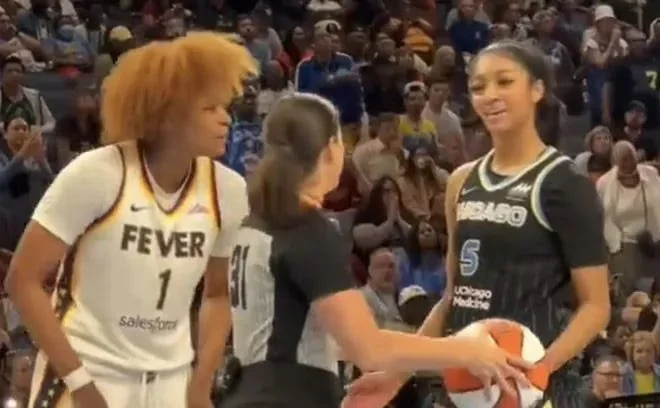
A playful NaLyssa Smith, former Indiana Fever forward, and Angel Reese, former Chicago Sky stand-out, share a joint look of frustration when the referee accuses them of lingering trash talk (Source: ESPNW)
In conclusion, sport will continue to act as a mirror to society and transness does not absolve you of innate anti-Blackness. After that final incident, I decided that I was done playing in the league, at least for a while. I want to play ball, but niggas is soft. That’s the crux of it. And it’s hard to build community when Blackness, and all iterations of it, are intentionally squashed and villainized.
The end.
Sources:
Black Girls & Sport: A Breakup Story
Caster Semenya’s sex eligibility battle has confounded sports for 16 years and still isn’t over
Inside (the) Game: Race, Gender, and the Sociocultural Business of Sport
‘Race’, racism and participation in sport
Study Finds Racial Bias Directed Against Women Basketball Players at HBCUs